In 1912, The Great Atlantic & Pacific Tea Company (A&P) and other early chains popularized standardized "economy stores" built on cash-and-carry systems rather than creditYou don't need a farm, expensive equipment, or years of experience to grow vegetables.
The 1930s Gave Birth to the Supermarket
King Kullen (1930): Michael Cullen opened King Kullen in Queens, New York, widely recognized as the first true modern supermarket. It featured massive floor space, heavy volume, parking lots, and aggressive price-cutting.
Great Depression price sensitivity: As economic hardship deepened, established chains like Kroger and Safeway adopted the supermarket format to slash overhead and labor costs.
A&P's pivot: A&P rapidly closed thousands of small clerk-based stores and opened over 1,100 supermarkets by 1938, driving down the percentage of disposable income Americans spent on food from 21% in 1930 to 16% in 1940
I provide this history to illustrate that with each of these developments, they were created in response to hard economic times and mass migration of citizens to larger urban areas. The effect of these migrations served to disconnect people from knowing what real wholesome, organically and locally grown food feels, smells and tastes like. The development of the modern day food mass distribution centers, a.k.a., grocery stores, supermarkets etc., serves the same food, in every market, to everyone in the entire country.
GYOF - Grow Your Own Food. Free Yourself from
Corporate Food Consumption!
We see and support the resurgence of GYOF-Grow Your Own Foods and urban gardening. It’s a major reason why Green With Indy exists. There's something satisfying about eating a tomato or harvesting lettuce that you grew yourself. It’s a major step toward self-sufficiency.
Vegetable gardening can save money on certain foods, encourage healthier eating, and help people reconnect with where their food comes from. It’s a major step away from consuming processed foods.
And getting started is easier than you might think.
What vegetables are easiest for beginners to grow?
For Indianapolis gardeners, several vegetables are especially beginner-friendly.
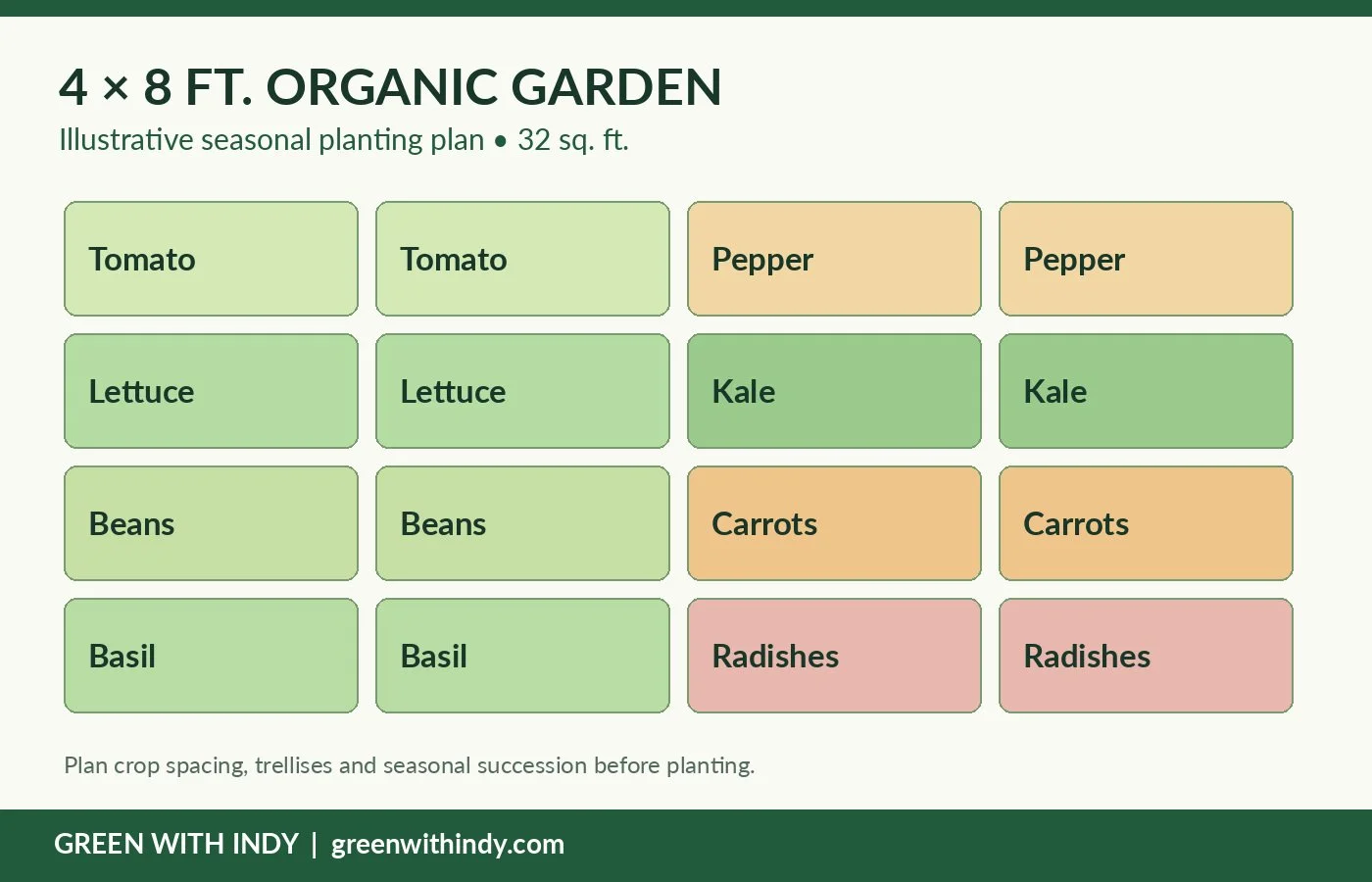
Lettuce, radishes, green beans, and leafy greens are relatively easy to grow. Tomatoes and peppers are also popular choices, although they generally need more warmth, sunlight, and attention. Once you learn the basics, you’ll then learn how to extend the grow season well into early winter, if you wish.
If you're starting with a small patio or balcony, container gardening is a great option.
A few appropriately sized pots, quality soil, water, and sunlight can produce surprisingly satisfying results.
How much sunlight does a vegetable garden need?
Most fruiting vegetables, including tomatoes and peppers, prefer at least six to eight hours of direct sunlight daily.
Some leafy greens tolerate less.
Choose a location with good drainage and convenient access to water.
Why is compost important for vegetable gardening?
Healthy soil is the foundation of a successful garden.
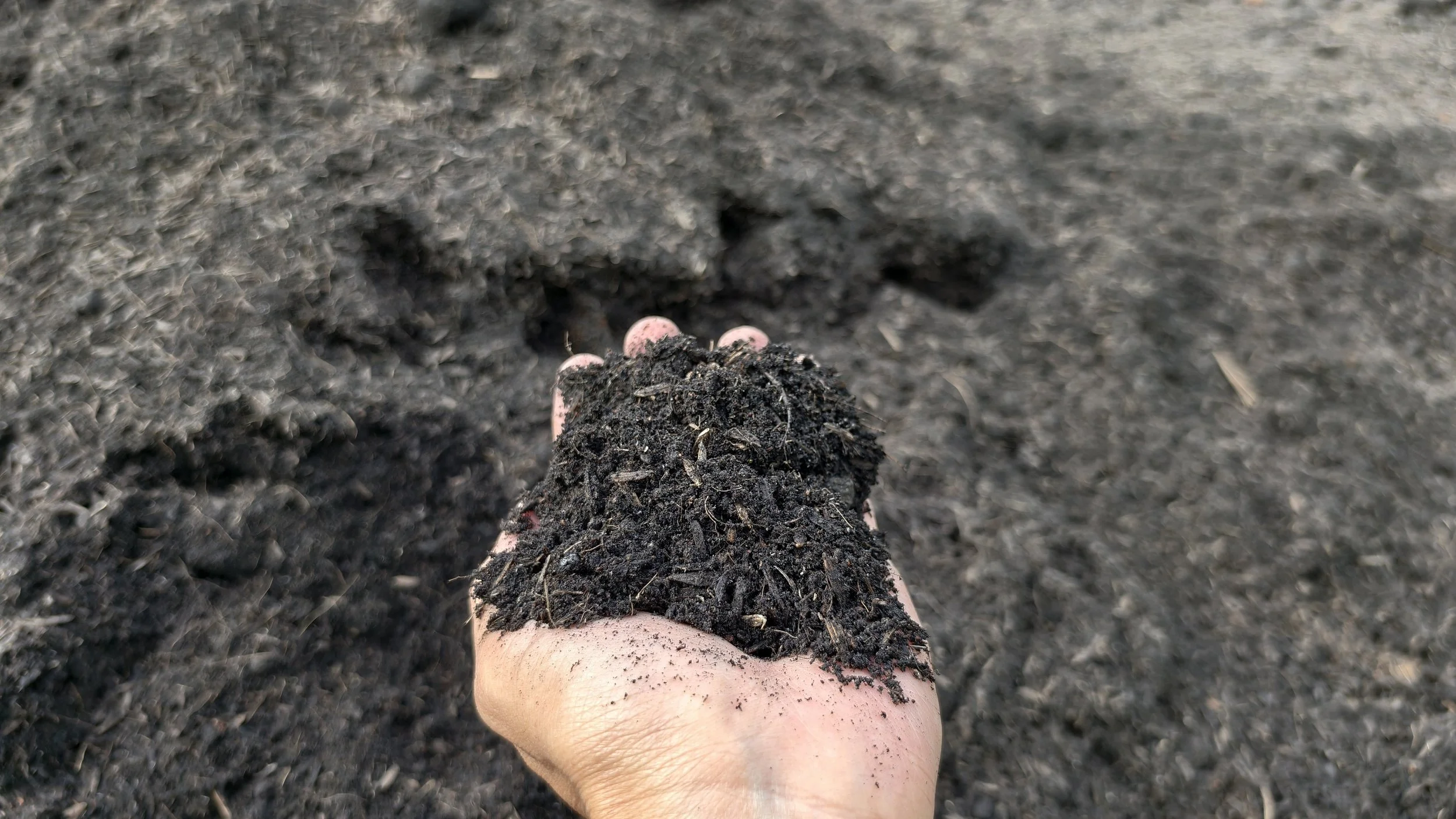
Compost adds organic matter, improves soil structure, helps retain moisture, and supports beneficial soil organisms.
In sandy soil, compost can improve water retention. In heavier clay soil, it can improve soil structure and drainage over time.
Compost also contributes nutrients, although it doesn't necessarily replace every fertilizer requirement.
Can kitchen food scraps help grow vegetables?
Absolutely, when they're processed properly. But, compostable materials are comprised of so much more than just food waste. Here’s a comprehensive of list of items that are compostable, but that can’t go into home compost sites.
Fruit and vegetable scraps can be composted and transformed into a useful soil amendment.
That creates a remarkable cycle: food scraps become compost, compost improves soil, and soil supports new food production.
Green With Indy helps Indianapolis households and businesses participate in that cycle through convenient organic waste collection.
You don't need a backyard compost pile to contribute.
The takeaway: Start small, learn as you grow, and remember that a successful vegetable garden begins below the surface—with healthy, living soil.
Indiana Zones by Region -
Take a look at the graphic posted about The Planting Zones of Indiana By Austin Geiger | Updated: October 23, 2026 [1].
Zone 5b (-15°F to -10°F): Found in the northwest corner of the state, including parts of Lake, Porter, LaPorte, and surrounding counties.
Zone 6a (-10°F to -5°F): Covers much of northern and central Indiana (including Fort Wayne).
Zone 6b (-5°F to 0°F): Covers much of southern and central Indiana, including Indianapolis and Bloomington.
Zone 7a (0°F to 5°F): Runs along the warm southern border near the Ohio River (including areas below I-64 and Evansville).